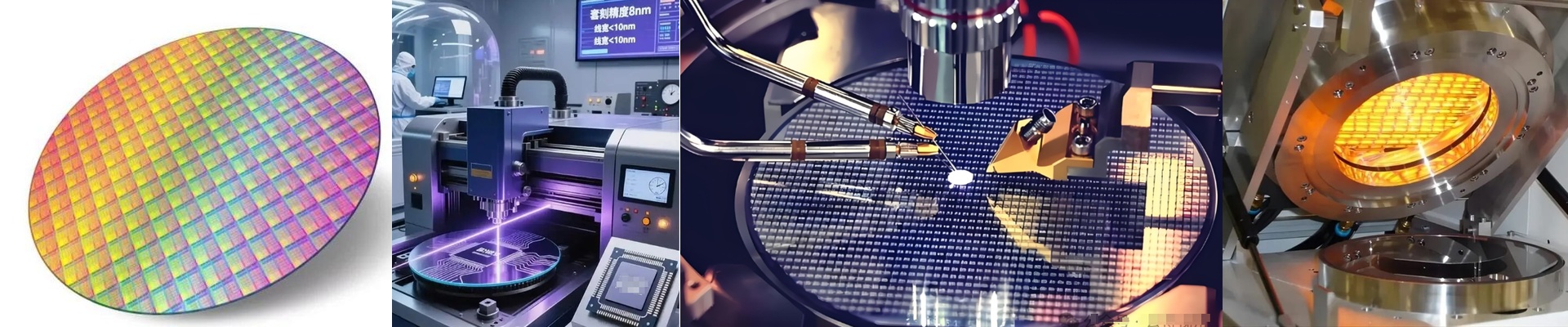

Keeping Your Wafers Clean: Why Lamp Design Actually Matters
If you’ve ever had a lamp burst during a high-load production run, you know it’s a nightmare. One pop and suddenly your chamber is showered in quartz shards and metallic grit. It’s a disaster. You aren’t just looking at scrapped wafers; you’re looking at hours—maybe days—of scrubbing the chamber clean. We’ve spent a lot of time figuring out how to stop that from happening with our carbon fiber infrared lamps.
Dealing with the Heat
When you push a lamp to its peak wattage, the temperature difference between the scorching center and the cooled ends is brutal. In a standard quartz tube, that kind of stress is a recipe for disaster. One tiny, microscopic flaw in the glass? Crack. To fix this, we use high-purity fused quartz. It has a very low coefficient of thermal expansion, which is a fancy way of saying it doesn’t freak out when the temperature swings. It can take a beating during those rapid heat-up and cool-down cycles without snapping.
Stopping the Mess
But we didn’t stop there. We wanted a backup plan to keep the pollution out of your fab. First, we make sure the carbon fiber heating element is dead-center. If it shifts, you get “hot spots” on the tube wall that can melt the glass. Precision is everything here. Then, there’s the physical shield. We offer encapsulated designs and protective sleeves. Think of it as an insurance policy. If the inner lamp does fail, the sleeve catches the debris. The shards stay put, and your wafers stay clean. One quick tip: keep an eye on your power supplies. It’s tempting to over-volt a lamp just to hit your temperature target a few seconds faster, but don’t do it. You’ll kill the filament way sooner and practically invite a blowout.
The Trade-off
Now, being honest, these safety layers add a bit of thermal mass. You might notice the ramp-up time is a tiny bit slower than if you were using a bare, unprotected tube. But really, who cares about a few extra seconds when the alternative is a contaminated line and a total shutdown? Just make sure you wire them to a stabilized current source. It keeps the thermal load steady and keeps everything running smooth.