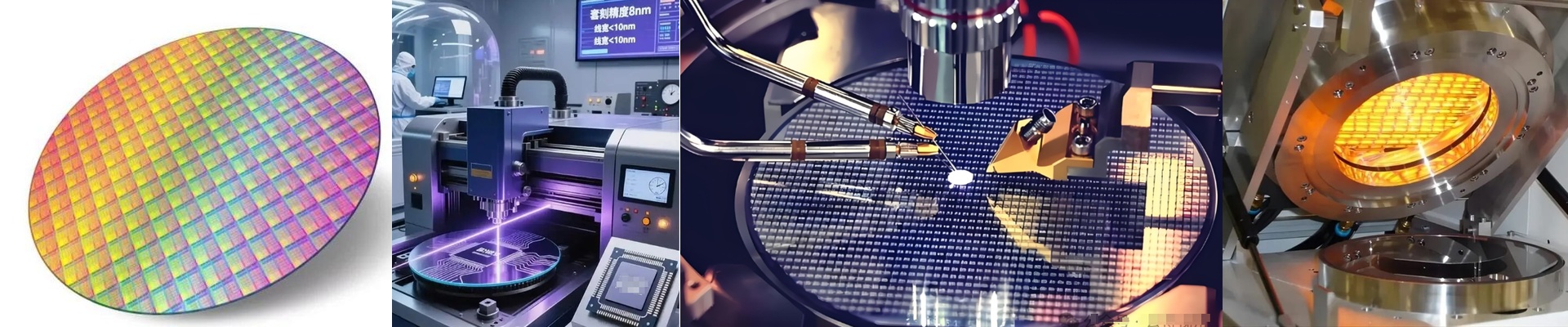
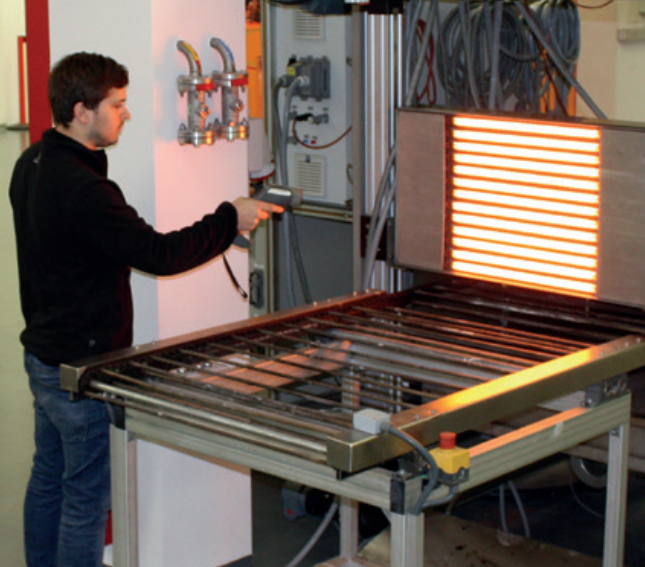
On the 300mm line, a half-degree drift during the photoresist bake is enough to turn a good lot into scrap. Tightening tolerances on the scanner alone won’t fix that. The bake step has to carry its own weight. We built an infrared lamp with an integrated air knife to tackle the two quiet killers: thermal drift and contamination. Both will eat away at repeatability before you even see them on the overlay plot. What matters under the hood The unit pairs a short-wave infrared emitter with an air knife that sits right next to it. The lamp heats fast and direct, line-of-sight, with tight spectral control. That keeps thermal lag and overshoot under control. Temperature uniformity across the wafer is held at ±0.1°C, and we verify it with in-situ mapping, not by extrapolating off a single sensor. The air knife lays down laminar flow to strip particulates and moisture off the surface, then exhausts them from the chamber. Particle counts stay within cleanroom Class 1–100. The payoff is a stable thermal budget for both soft bake and hard bake, consistent critical dimension control, and fewer reworks. Why this works in lithography Photoresist processing is a diva. It’s sensitive to temperature history and airborne defects. This unit comes up to temperature quickly, so idle time drops and the bake profile stays steady run-to-run. All materials are cleanroom-compatible and the air path is sealed, so you don’t get outgassing or shedding. Energy use is lower than convection ovens because the energy goes straight into the film, not into heating chamber walls. Reliability is about uptime. Units run 5,000+ hours with less than 5% output drop, keeping 24/7 operation moving without unplanned stops. The practical details you can’t skip Installation needs a dedicated exhaust tie-in, and you have to verify air supply quality. If the filtration is sub-par, you’ll just reintroduce particles. The lamp performs best with a clear line-of-sight to the wafer, so pay attention to the geometry around the process chamber. Set the air knife pressure within the process window. Too high and you risk disturbing the resist; too low and you lose particle removal. And match the emitter spectrum to the photoresist absorption profile—that’s how you get the tightest uniformity.