


Getting Your IR Systems Right in a Smart Fab
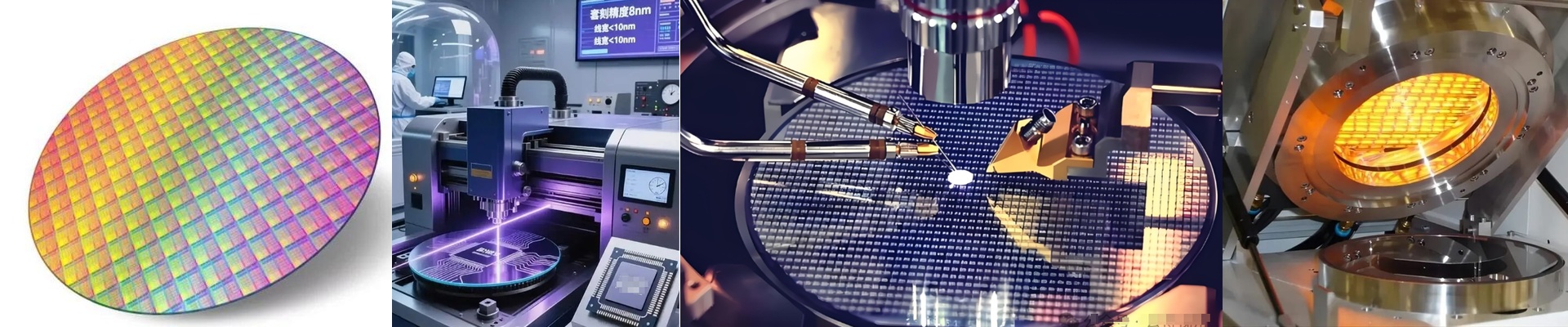
If you’re building out a Smart Fab, you’ve probably realized that old-school resistive heating just doesn’t cut it anymore. It’s slow and clunky. When you’re dealing with high-purity semiconductors or thin films, you need something that hits the target directly. That’s where vacuum-compatible infrared (IR) heaters come in.
The Physics of Heat in a Vacuum
Here’s the thing about vacuum environments: convection is gone. There’s no air to move the heat around, so you’re relying entirely on radiation. We build our IR systems to push as much heat as possible while keeping outgassing to a minimum. High wattage density is the goal here. It means you hit your target temperatures faster, which kills your cycle times and gets parts moving. Just a heads-up, though. If you’re pushing for extreme heat, keep an eye on your cooling jackets. You don’t want the radiative bounce-back overheating your chamber walls.
Making Your Heaters “Smart”
In a modern fab, a heater shouldn’t just be a piece of hardware that gets hot. It needs to talk to you. We make sure these systems plug right into your PLC and SCADA networks. By using precision power controllers, you can actually see the wattage and temperature gradients in real-time. It turns a “dumb” lamp into a sensor. Now, instead of guessing, you can track thermal drift. You’ll know a lamp is about to give up the ghost before it ruins your yield. That’s a huge weight off your shoulders.
The Real-World Stuff
Switching to IR usually saves a ton of space. You can ditch those bulky convection ovens and slide these into your layout. It’s a much cleaner setup. But there is a catch. IR is precise—maybe too precise. If your part is off by just a few millimeters, you’ll end up with cold spots. Your positioning has to be spot on. To handle this, we usually pair the heaters with closed-loop PID controllers. It keeps everything tight and consistent, which is exactly what you need when your whole production line is digitized.